

Fetal Anomaly Scan: What Can It Detect and What Happens If Something Unexpected Is Found?
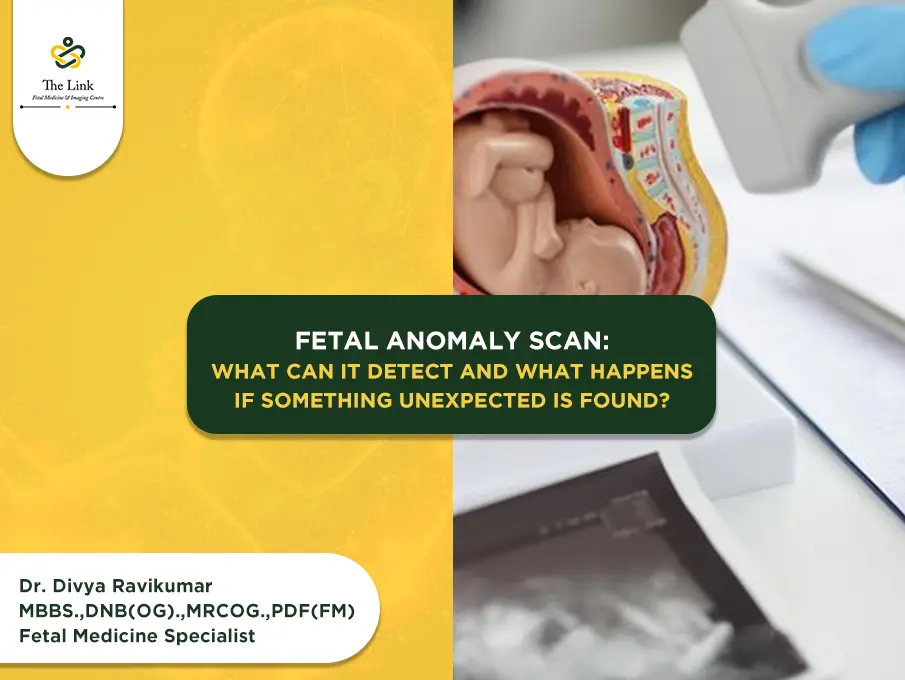
A fetal anomaly scan is a detailed ultrasound examination performed during pregnancy to assess the baby’s anatomy and development. It is commonly performed around 18–22 weeks of pregnancy and is also known as the 20-week scan, anatomy scan, or Level 2 scan.
The scan examines the baby’s major organs and body structures and also assesses the placenta, amniotic fluid, and other pregnancy-related findings. If something unexpected is identified, it does not automatically mean that the baby has a serious problem. Further assessment may be recommended to understand the finding more clearly.
What Is a Fetal Anomaly Scan?
A fetal anomaly scan is a detailed pregnancy ultrasound designed to examine the baby's physical development.
Unlike an early pregnancy ultrasound that primarily confirms pregnancy location, viability, and gestational age, the anomaly scan provides a more detailed assessment of the baby's anatomy.
Depending on the pregnancy and the quality of imaging possible, the specialist may assess:
Brain and skull
Face and facial structures
Spine
Heart and major cardiac structures
Chest and lungs
Stomach and abdominal organs
Kidneys and bladder
Arms, legs, hands, and feet
Placenta and its location
Amniotic fluid
Umbilical cord
The scan may identify some structural abnormalities, but no ultrasound can detect every possible condition.
When Is the Fetal Anomaly Scan Done?
The fetal anomaly scan is generally performed during the second trimester, most commonly between 18 and 22 weeks of pregnancy.
The exact timing may vary depending on the pregnancy, previous scan findings, maternal health, gestational age, and the recommendation of the obstetrician or fetal medicine specialist.
In some pregnancies, an earlier or additional detailed scan may be advised when there is a specific concern or increased risk of a fetal abnormality.
What Can a Fetal Anomaly Scan Detect?
The main purpose of the scan is to look for structural abnormalities and assess fetal development.
Brain and Spine Abnormalities
The specialist examines the baby's skull, brain structures, and spine. Certain structural abnormalities involving the brain or spinal cord may be visible during the scan.
Heart Abnormalities
The fetal heart is carefully assessed, including its chambers, position, rhythm, and major vessels. If there is a concern about the baby's heart, a fetal echocardiography may be recommended for a more detailed cardiac assessment.
Facial and Abdominal Structures
The scan can assess facial structures and organs within the abdomen, including the stomach, kidneys, and bladder.
Limb Development
The arms, legs, hands, and feet are examined to assess their development and appearance.
Placenta and Amniotic Fluid
The location and appearance of the placenta and the amount of amniotic fluid are also assessed because they can provide important information about the pregnancy.
Can the Scan Detect Every Birth Defect?
No. A fetal anomaly scan cannot detect every genetic condition, developmental disorder, or structural abnormality.
Some conditions may not be visible on ultrasound, may develop later in pregnancy, or may be too subtle to identify during the scan.
Ultrasound is also different from genetic screening or diagnostic testing. A normal anomaly scan does not completely rule out genetic or chromosomal conditions.
This is why fetal assessment may involve a combination of medical history, ultrasound, prenatal screening, and, when appropriate, diagnostic testing.
What If Something Unexpected Is Found?
Finding an unexpected feature during an anomaly scan can understandably be stressful for parents. However, an ultrasound finding does not always mean that there is a serious or permanent problem.
The next step usually depends on what has been identified.
The specialist may:
Explain the finding and what it may mean.
Review previous ultrasound and screening results.
Perform a more detailed or targeted ultrasound.
Recommend a repeat scan after a suitable interval.
Suggest fetal echocardiography or another specialist assessment.
Discuss genetic counselling or diagnostic testing when clinically appropriate.
Some findings may disappear or appear less significant on a later scan, while others may require ongoing monitoring or specialist care.
Does an Abnormal Scan Mean Something Is Wrong With the Baby?
Not necessarily.
Some ultrasound findings are temporary, minor, or considered variations of normal development. Other findings may indicate a structural abnormality that requires further investigation.
The significance depends on the specific finding, gestational age, associated ultrasound features, and results of other screening or diagnostic tests.
Parents should therefore avoid interpreting an isolated scan finding without discussing it with their obstetrician or fetal medicine specialist.
What Happens After an Abnormal Fetal Anomaly Scan?
When a significant abnormality is suspected, parents may be referred to a fetal medicine specialist.
The specialist may perform a detailed assessment and explain:
What has been seen on the ultrasound
How certain the finding is
Whether additional abnormalities are present
Whether further scans are needed
Whether genetic testing may be appropriate
What treatment or monitoring options may be available
What the finding could mean during pregnancy and after birth
This process is often called fetal counselling and is intended to give parents clear, balanced information before making decisions about further care.
Fetal Anomaly Scan and Genetic Testing
An anomaly scan and genetic testing provide different types of information.
An ultrasound primarily evaluates the baby's physical structures and development. Prenatal screening tests may estimate the chance of certain chromosomal conditions, while diagnostic procedures such as amniocentesis or chorionic villus sampling can provide more definitive genetic information for specific conditions.
If an ultrasound finding is associated with an increased likelihood of a genetic condition, the doctor may discuss whether additional testing is appropriate.
Why Choose a Specialist Fetal Medicine Centre?
A detailed anomaly scan requires appropriate ultrasound equipment, experience, and systematic assessment of fetal anatomy.
A fetal medicine specialist can also help when the scan identifies a possible abnormality by providing further imaging, explaining the findings, coordinating additional investigations, and discussing pregnancy management where required.
For expecting parents in Chennai, choosing a centre experienced in fetal medicine and detailed pregnancy ultrasound scans can help ensure that unexpected findings are assessed carefully and explained clearly.
Conclusion
A fetal anomaly scan is an important part of pregnancy care because it provides a detailed assessment of the baby's developing anatomy. While many scans are reassuring, sometimes an unexpected finding may require additional evaluation.
An abnormal finding does not automatically mean that something is seriously wrong. A careful review by a fetal medicine specialist can help determine what the finding means, whether further testing is needed, and how the pregnancy should be monitored.
For parents undergoing an anomaly scan in Chennai, having access to accurate information and appropriate specialist counselling can make the next steps clearer and less overwhelming.
Doctor’s Note
Dr. Divya Ravikumar is an Obstetrician & Gynaecologist trained in fetal medicine and fetal interventions, with over 10 years of experience in maternal and fetal care. Her areas of care include prenatal diagnosis, advanced fetal imaging, management of pregnancy complications, genetic counselling, and individualized support for expecting parents.
— Dr. Divya Ravikumar, MBBS, DNB (OG), MRCOG, PDF (Fetal Medicine), Fetal Medicine Specialist
FAQs
1. What is a fetal anomaly scan?
A fetal anomaly scan is a detailed pregnancy ultrasound, usually performed around 18–22 weeks, to examine the baby's major organs, body structures, growth, placenta, and amniotic fluid.
2. Can a fetal anomaly scan detect Down syndrome?
Anomaly scans may identify certain ultrasound markers or structural findings associated with chromosomal conditions, but the scan cannot diagnose Down syndrome. Prenatal screening or diagnostic genetic testing may be considered depending on the pregnancy.
3. What happens if an abnormality is found during the scan?
The doctor may recommend a more detailed ultrasound, repeat imaging, fetal echocardiography, genetic counselling, or diagnostic testing depending on the finding and overall pregnancy history.
4. Is a fetal anomaly scan the same as a Level 2 scan?
Yes. The terms fetal anomaly scan, anatomy scan, and Level 2 scan are commonly used to describe a detailed second-trimester ultrasound examination of fetal anatomy.
5. Can a normal anomaly scan guarantee a healthy baby?
No. A normal scan is reassuring, but ultrasound cannot detect every genetic, developmental, or structural condition. Ongoing antenatal care and recommended screening remain important.
References

Comments